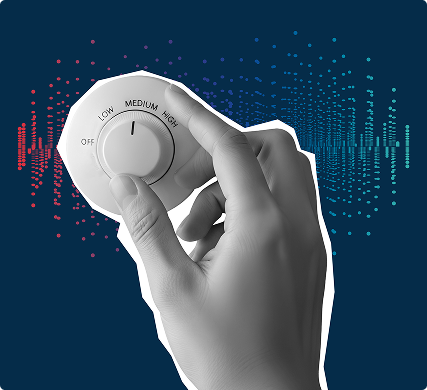
Dry eye disease is, in many ways, the great improviser of ophthalmology. It shows up differently depending on the day, the patient, the weather, the air conditioning, the screen time, and perhaps even the alignment of the planets (we’re only half joking). For those of us designing clinical trials, this variability is both fascinating and formidable. At Ora, we like to think of dry eye trials as trying to listen to a symphony where every instrument is tuning at once – beautiful potential, but a lot of noise to sort through. And if we want to advance truly novel treatments, the first step is learning how to quiet that noise just enough to hear what really matters.
Because here’s the thing: dry eye disease isn’t one condition; it’s a constellation. Patients may have aqueous deficiency, evaporative dysfunction, inflammatory drivers, neurosensory abnormalities, or some combination of the above. This diversity makes finding the “right” patients for a given therapy particularly tricky. Clinical trial literature consistently points to the need for precise inclusion criteria and careful patient stratification, as variability in tear film stability and the often-misaligned relationship between signs and symptoms can confound results. And even when you find the right cohort, traditional endpoints like staining scores or symptom questionnaires don’t always capture the full picture, making it harder to distinguish signal from statistical static.
Enter the art (and science) of turning down the noise. One of the most powerful tools in this effort is Ora’s Controlled Adverse Environment, or CAE®. Think of it as a carefully choreographed stress test for the ocular surface: by standardizing humidity, airflow, temperature, lighting, and visual tasking, the CAE creates a reproducible setting that gently nudges dry eye signs and symptoms into clearer view. This isn’t about making patients uncomfortable for the sake of it; it’s about removing the unpredictable variables of the outside world so we can better understand how a therapy truly performs. The CAE has been shown to minimize environmental variability, enhance reproducibility, and even enrich patient populations by identifying those most likely to demonstrate measurable change. In other words, it helps us hear the melody beneath the noise.
And when you pair that controlled environment with thoughtful endpoint innovation, something remarkable happens: clarity. Ora’s work has long focused on developing sensitive, mechanism-aligned endpoints that capture both the objective and subjective realities of dry eye. In CAE-based models, these endpoints can reveal treatment effects with greater precision often requiring fewer patients, fewer sites, and less time to reach meaningful conclusions. Case studies and clinical research have demonstrated how CAE can identify specific subpopulations like “hyper-responders” who exhibit stronger, more reproducible symptom responses, ultimately improving a trial’s ability to detect therapeutic benefit. It’s not just about faster trials; it’s about smarter ones.
Meanwhile, the broader field is buzzing with inC6novation aimed at refining how we measure disease in the first place. Recent ARVO research has explored advanced imaging and analytical techniques—like cyan-channel conversion and automated quantitative grading of lissamine green staining—to enhance the detection and classification of ocular surface damage. These approaches use image processing and machine learning to improve grading precision and reduce subjectivity, offering a compelling glimpse into the future of endpoint development. Given that lissamine green staining is already a key tool for identifying damaged epithelial cells and inflammation on the ocular surface, improving its accuracy could significantly sharpen how we assess treatment impact. It’s a reminder that innovation isn’t just happening in therapeutics, it’s happening in how we see.
And that matters. Because despite thousands of studies and a growing pipeline of therapies, dry eye disease remains an area where demonstrating clear, consistent efficacy has proven challenging. Patients are still searching for solutions that address the root causes of their symptoms, not just the surface manifestations. To meet that need, we have to move beyond conventional approaches, embracing tools like CAE, investing in better endpoints, and designing trials that reflect the true complexity of the disease. It’s a tall order, but it’s also an exciting one.
At Ora, we don’t see dry eye as a problem to be simplified. We see it as a puzzle to be solved, piece by intricate piece. By turning down the noise and sharpening our focus, we can help novel therapies stand out, demonstrate real clinical benefit, and ultimately reach the patients who need them most. Eye think… when the field comes together sharing ideas, refining methods, and embracing a little creative thinking, we won’t just be listening more closely. We’ll finally start to hear something new.