
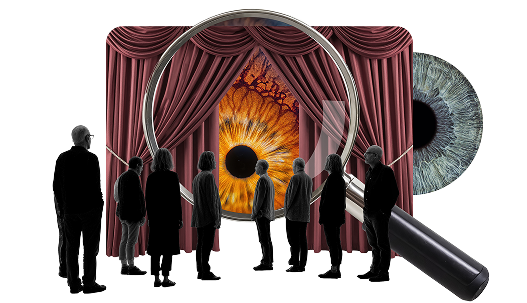
Once upon a time (or perhaps just last Tuesday in a conference room full of whiteboards), we realized something: ophthalmic clinical trials are a bit like our understanding of eyesight themselves—complex, nuanced, and ever-evolving. At Ora, we’ve spent decades helping therapies move from idea to impact, navigating a landscape filled with both brilliant breakthroughs and baffling barriers. And along the way, we’ve gathered stories of ingenuity, persistence, collaboration, and yes, the occasional head-scratcher. So, in a moment of collective whimsy (and determination), we decided it’s time to start sharing those stories. Welcome to the Ora blog.
This blog is our invitation to peek behind the curtain of ophthalmic clinical trials—the challenges, the victories, and the unexpected plot twists. We’ll explore the hurdles that make this work so uniquely demanding: identifying and enrolling the right patients, designing trials for diseases that often present quietly but progress relentlessly, and ensuring that innovations reach those who need them most. We’ll also celebrate the clever, sometimes unconventional solutions that are reshaping the field—from adaptive trial designs to emerging technologies that help us see (pun intended) new possibilities.
Why does this matter? Because the status quo isn’t enough. Ophthalmic patients face real challenges in finding treatments that work for their specific conditions, especially when diseases are rare, multifactorial, or not yet fully understood. The path from discovery to delivery can be long and winding, and along the way, promising ideas can stall due to limited funding, difficulties in identifying eligible participants, or the sheer complexity of studying therapies with novel mechanisms of action and intricate modes of administration. To move forward, we need more voices—curious, bold voices—willing to question assumptions and push beyond what’s been done before.
The challenges facing the industry are as intricate as the eye itself. Securing funding requires demonstrating both scientific promise and practical feasibility. Finding the right patients means reaching diverse populations and designing trials that are both rigorous and accessible. And managing trials for cutting-edge treatments, whether gene therapies, sustained-release implants, or biologics with complex mechanisms, demands a level of precision and adaptability that can test even the most seasoned teams. Yet within these challenges lies opportunity: the chance to rethink, redesign, and reimagine how we bring therapies to life.
Ultimately, this blog is about community. The future of ophthalmology won’t be built in silos—it will emerge from shared insights, open dialogue, and a collective willingness to learn from one another. By bringing together researchers, clinicians, sponsors, and innovators, we can leap beyond today’s limitations and accelerate toward the treatments of tomorrow. So, pull up a chair, adjust your focus, and join us as we explore what it takes to turn vision into reality—one story, one solution, and one breakthrough at a time.